

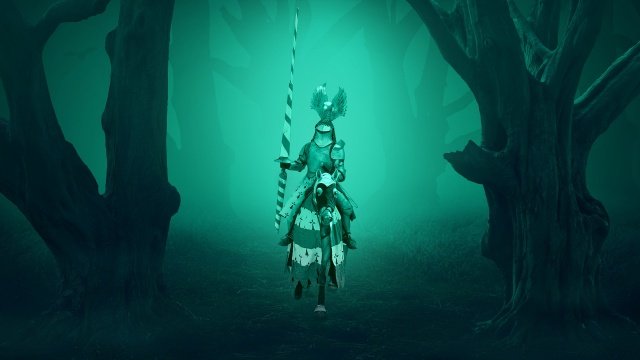
Long Way Home is one of my early works. I plan to incorporate it into a future series.
Like many of my early works, I never finished Long Way Home because I didn’t have a clue how to plot a story. I’d get really immersed in the early chapters, but when it became clear that I didn’t know where I was going with the story, I’d throw up my hands in frustration and shelve it. Looking back on Long Way Home, I find it interesting that many of the themes that interested me then still do today.
Intimate personal relationships. Even though I don’t write romance stories per se, I enjoy exploring my characters’ intimate relationships. In Long Way Home, the romantic relationship involves a married couple. In my current series, Modified Humans, it’s more complicated: an arranged threesome.
Handsome(!) men stuck in situations where they have very little agency. In Long Way Home, the protagonist is stuck in an arranged marriage in a matriarchal society. In Modified Humans, the protagonist is trapped in a gilded cage, serving a critical role to society in a pandemic and inter-pandemic world.
Some form of ESP. Having met a couple of real live people with a strong affinity for the “energy” world, it seems only natural to explore this in my stories. In Long Way Home, the ability to sense things that normal people can’t will be developed via the Bryner Institute. In Modified Humans, it resides in my protagonist’s ability to see people’s “fields”.
Strong women. “Strong” doesn’t necessarily mean a chick in armour wielding a sword or gun (although it could). I’m referring more to “inner strength”. In Long Way Home, this is embodied in two characters: the protagonist’s wife, and his bodyguard. In Modified Humans, it’s also present in two characters: the protagonist’s partner, and his bodyguard. I didn’t realize till just now that Long Way Home’s Moëse was the template for Sinclair, a bodyguard who is an important minor character in Modified Humans.
Horses. I don’t think my passion for horses will ever go away, and I love writing about them. However, they are more present in Long Way Home than in Modified Humans. Some of my Modified Humans alpha readers have repeatedly shaken their heads in perplexity at my insistence in including horses in the series. “Just wait,” I keep promising. “Horses will play a larger role later in the series.”
So without further ado, if you’re interested, here are the first few pages of Long Way Home, written back in 1992:
Long Way Home — Chapter 1
Florinda wasn’t coming.
Andris guessed it the minute a boy in house livery showed up at the gate and waved one of the bodyguards over from his slow patrol of the saddling enclosure. The boy, tall and gangly, put his mouth to the guard’s ear and spoke earnestly. Andris’s own ears seemed to fill with a heavy quiet. The pair were too far away to overhear; there was only the muted mutter of the crowd milling beyond the perimeter barrier, a low-pitched sound that bounced off the rafters and twined around itself. The guard nodded and sent the kid away, then turned to face Andris across the expanse of hoof-marked sand. He spoke into his throat-mike. One of the horses chose that moment to squeal and get in the way, but it didn’t matter. Andris was certain now. Florinda wasn’t coming, and he was witnessing the beginning of the end of his marriage.
His breath expelled in a hiss.
“What’s Thetford saying?” he asked Moëse. Because, damn it, he had to hear it, hear the words.
At his side, Moëse held up one slim finger, wait. Her head was tilted, listening. The comm implant showed as a patch of silver filigree behind her right ear. With her short-cropped hair and black tights and unadorned doublet, she could have passed as an ordinary attendant and not one of the personal bodyguards of one Andris m’sir Rohansi, second son of the First Branch of the mainland’s Third Tower, husband to m’Dame Florinda d’Isford who was one of Alterness Isle’s ranking aristocrats.
The squealing horse, black and belligerent and belonging to Andris’s opponent in the upcoming match, reared and thrashed the air with its forelegs. Its entourage fluttered away like worried midges, and the groom narrowly escaped being trampled as the animal lunged forward. “Get up there, you scurvy!” Andris heard the man growl as he yanked the reins with the nonchalance of long practice. The gelding froze long enough for the steward to finish inspecting its armor and to start on the duelist’s saber. Andris caught the tang of ozone as the scanner played along the blade’s touch-field.
Moëse murmured, “Roger that,” into her throat mike and turned to Andris. Her pale blue eyes were without expression. “M’Dame Florinda,” she confirmed in neutral tones, “left for Enforêt two hours ago.”
— And hadn’t even bothered to tell him in person. Anger jolted along Andris’s nerves, making them jump like heated wires. “Was Lover-boy with her?” he asked. — Amazing how calm his voice sounded.
“Apparently,” Moëse replied carefully, “there were several guests with m’Dame in the aircraft.”
Andris was careful to keep his expression neutral because even in a restricted area like the saddling enclosure, there was always some newscammer snooping for good footage: catching him bare-chested after a workout; or trailing after him at public functions to extemporize on the fit of his clothes; or asking why he never wore his hair unbraided. God damn circus. Bloody demeaning. If he had a meltdown in public, it would certainly get plastered over every title page in Alterness. He leaned toward his own horse, Faydrin, and pretended to be checking the saddle before hissing, “Bloody fucking hell.”
Faydrin’s groom gave him no chance to wallow in it. “M’sir,” — she aimed her towel in a final swipe at the horse’s bridle — “it’s time for your equipment check.”The steward was closing on them. Andris sucked in a savage breath, slammed a mental gate on the rage that threatened to scald anyone who got too close, and straightened.
“So,” the steward said, “all set?” It was a rote question that didn’t want an answer. Andris moved aside, giving the man plenty of room to tug and poke and probe at Faydrin’s trappings: the neck-armor and croup-armor, the saddle that had been buffed to a warm gloss. “At least this son’s got better manners than Carstairs’ black devil,” the fellow observed, stepping away from the horse and priming his scanner. Faydrin pinned his ears as the instrument belched faint electronic noises. “Ah,” the steward added, unperturbed, “did I speak too soon?” The groom cajoled Faydrin with her usual skill as the scanner skimmed quickly over the array of flash-sensors that crusted his armor like a gossamber web. The sensors flared with bright pops of red and green and blue light as the instrument test-checked them in a sweeping pass and recorded the output.
“OK,” the steward grunted, keying the data into storage and turning to Andris. “Your turn, mein-ser.”
Andris handed over his saber, watched the touch-field jump along the blade like heat-lightning, and took the weapon back when the man nodded his satisfaction. Then it was the manual armor-check, and the electronic scan that would make him look, from a distance, like a man touched by a flitting, sparkling aurora. Moëse, he noted remotely, was watching him with a narrow-eyed impassivity that said she was worried.
“All right,” the steward said when he was done. He motioned an assistant to hand Andris his helmet. Moëse deftly intercepted the exchange and took charge of the helmet herself. The steward didn’t bat an eye. “You will notice, mein-ser,” he said in a stiff, formal voice, “that there are resonator electrodes temporarily embedded into your helmet lining.”Moëse had already found them. She frowned and tipped it towards him so he could see. The electrodes showed like fine hairnetting crusted on to the moulded surface. “These,” the steward went on, “were authorized by Association of Equindo Duelists at the request of the Bryner Institute. Both you and your opponent, mein-ser Carstairs, will be monitored throughout this match and the results forwarded to the Institute for evaluation. It is part of an ongoing study on…” — he frowned and consulted his hand-held screen — “on the manifestation of psi factors in randomly chosen athletes. I need you to sign your consent here.” He offered Andris his screen and a stylus.
Andris wondered if his face reflected any of the rage that pounded through his head. First Florinda, and now this! It wouldn’t be the first time the Bryners tested him. Randomly chosen — sure! The Bryners shadowed him like smelly socks. He was good with horses and so they wouldn’t leave him alone. He could never figure out if it was genuine interest or free publicity that motivated them. Having their name associated with his hadn’t done their image any harm, that was for sure. For a moment he considered telling the steward where he could stick his stylus, but if he didn’t sign, he’d be barred from tonight’s match, and the rumor mongers would just love that.
So he smiled and he shrugged and he signed, and handed the steward back his stuff. The man slung the scanner by its strap over his shoulder. “Please mount up and move into the warm-up ring. No unauthorized personnel beyond the gate.” And then, trading his formality for a grin: “Good luck, mein-ser Andris. The crowd’s wired tonight. I know you won’t disappoint them.” He shook Andris’s hand and departed.
Andris took Faydrin’s reins from the groom, who gave the stallion’s neck a final clap before scampering off to find herself a spot at ringside. Moëse moved in close and dropped her voice low. “If you can’t keep your mind on your job,” she warned, “you shouldn’t go out there.
“Andris refused to set his anger against that pale, intense gaze. He glanced instead across the saddling enclosure to where Thetford leaned against the boards, looking like a man loafing at his ease except for the restless, roving eyes that tracked everything in this place: the departing straggle of Carstairs’s attendants; the intense confab between two blue-coveralled Hippodrome maintenance techs huddled over a grimy blueprint; the push-and-shove of rubberneckers at the security perimeter.
“Damn it,” Andris spat finally, “do you think Florinda arranged this? First she doesn’t show up, then the Institute is testing me again. If she wants to get rid of me, having me labeled a witch will make it easy for her. You know what these islanders think of psi-talent.”
“Except that you don’t possess any psi-talent. You have two previous Bryner probes to prove it, and this one will prove it too,” Moëse put in reasonably.
Which wasn’t the point, and she damn well knew it. All that was needed was a little bit of doubt, a bit of innuendo, and the rumor mill would build him into a monster. Here he was, riding against Willem Carstairs in the Thanksgiving match, with all of Alterness society watching in the stands, and Florinda chose to take off to the cottage with her old boyfriend.
Making a very public statement about the value she placed on her husband.
And she wouldn’t even acknowledge his right to be upset.
“It’s my right to sleep with whomever I wish,” Florinda had explained with polite but frayed patience that first time. “I’ve indulged your mainlander sensibilities for over a year, Andris. My sleeping with Yuri Ootan doesn’t change how I feel towards you. But you have to understand that Yuri and I were friends for a very long time before you came along. Alterness is your home now. You could try to be generous about this.”
Generous about letting her sleep with Yuri or whoever she damn well pleased, because that was how things worked here in Alterness. The sociologists called it a strategy against low fertility rates. They even had a name for it: droit de la dame.
Generous, too, when she asked him to provide service — that was how they worded it, provide service — to the High House ladies who were supposedly entitled, including her own sister and m’Dame Lexi de Loches who was old enough to be his grandmother.
Florinda was not happy at all about his continued refusals, and since the birth of their daughter, she’d become downright… hostile.
“You pay me to keep you safe,” Moëse said, jarring him out of his thoughts. “In my professional opinion, it’s bloody dangerous for you to take on a duel in your present frame of mind. I recommend against it.”
He laughed, a humorless bark. “As if I’d back out now!”