I’ve often compared writing a book to preparing Thanksgiving dinner. Both take a long time to prepare and a fraction of the time to consume—although the months, or even years, it takes to write a book compared with the few hours it takes to read one put writing and turkey dinners into entirely different categories.
Seeing Through Other Eyes
But I don’t measure stories in hours.
I still vividly remember the day I acquired my first science fiction novel. It was summer, and I was fifteen, sitting on my front steps with my best friend, Donna. After telling me what a wonderful story Warlock of the Witch World was, she insisted on giving me her copy. I don’t remember every detail of the plot now, but I remember how it made me feel. For the first time, I was truly looking at the world through someone else’s eyes—someone facing recognizable problems in a setting that was mind-blowingly strange and wonderful.
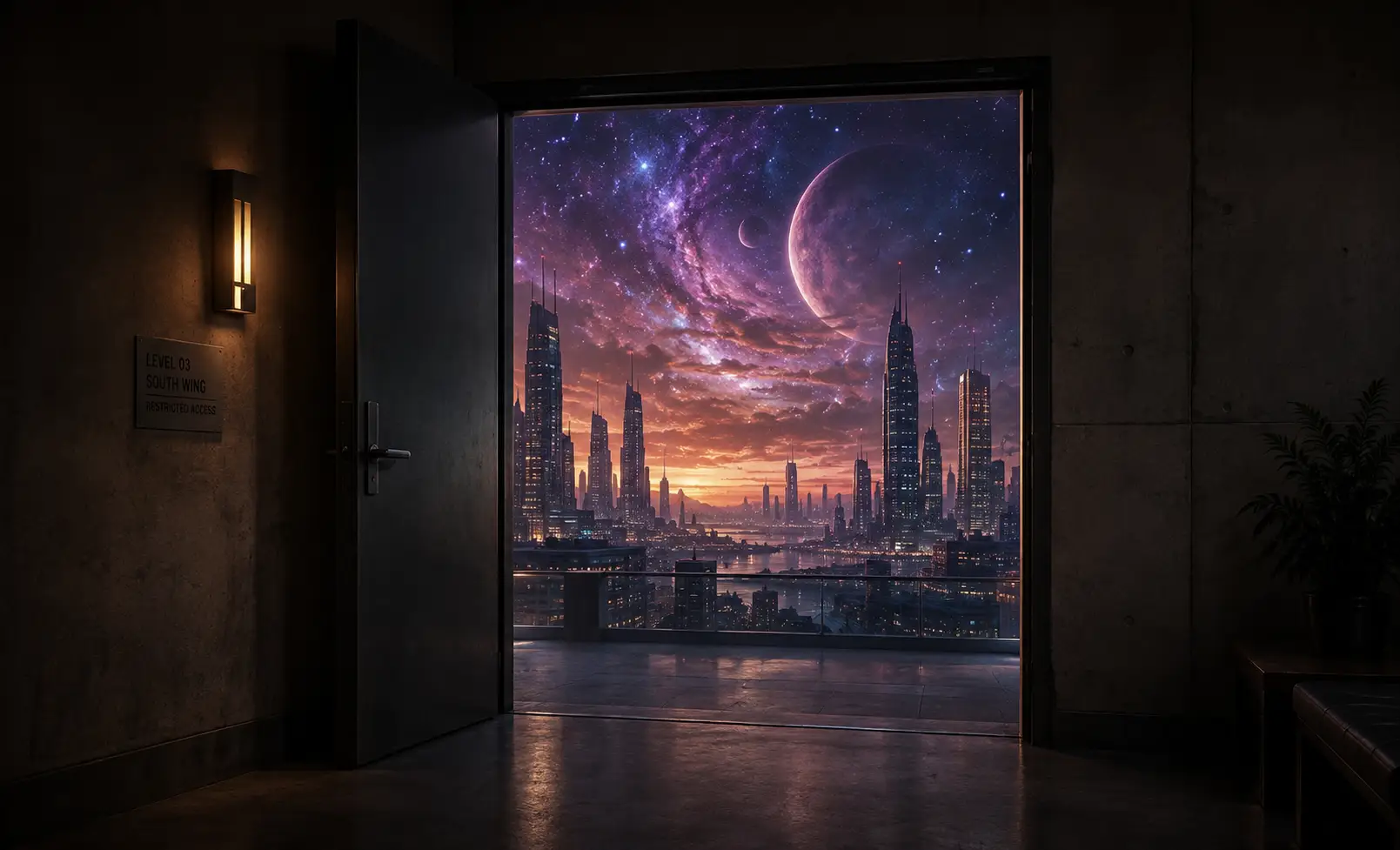
That experience opened a door that has never closed.
Since then I’ve travelled to imaginary planets, ridden beside unlikely heroes, stood in the shoes of people whose lives were nothing like mine, and occasionally met characters I’d have happily invited home for dinner.
That’s why I believe stories matter.
The best stories transport us deep into another person’s life. Sometimes we agree with their choices, sometimes we don’t. But if the author has done the job well, we understand why those choices made sense to that character. Even when we disagree, we’ve shared their fears, hopes and impossible decisions. For a little while, the world looks different because we’ve seen it through another pair of eyes.
I think that’s one of fiction’s great gifts. It reminds us that every person is living a life as rich and complicated as our own.
Science fiction has always seemed especially good at doing this.
Old Questions, New Worlds
Some people think science fiction is mainly about futuristic technology, alien worlds or spectacular space battles. Those things are entertaining for sure, but they’re not what drew me to the genre, and they’re not what keeps me writing it.
To me, science fiction is a way of asking timeless human questions in unfamiliar settings.
What makes us who we are?
Can we choose our own future, or are we shaped by forces beyond our control?
What do we owe the people we love?
How do we hold on to compassion when the world encourages us to let it go?
By changing the setting, science fiction lets us examine those questions from fresh perspectives. Strip away today’s assumptions, imagine a different society or a new technology, and suddenly we can see ourselves more clearly.
Those are the kinds of questions I explore in my own fiction.
My characters aren’t superheroes. They make mistakes. They carry old wounds. They struggle with loyalty, identity, grief and responsibility. Dena Sinclair‘s courage doesn’t come from fearlessness. Jian‘s greatest battles aren’t fought with advanced technology, but within himself. Like all of us, my characters are trying to find meaning while making imperfect choices in complicated circumstances.
The futuristic setting simply provides a different lens through which to explore very old truths.
Perhaps that’s why I’ve never believed that stories exist only to help us escape reality. At their best, they help us return to reality with greater understanding. They remind us that courage often looks ordinary, kindness is rarely wasted, and every stranger has a story we know nothing about.
I don’t imagine a novel will change the world. But perhaps it can change a single person’s perspective, even if only for an evening. Perhaps it can leave someone seeing another human being with just a little more compassion than they had before.
If my stories can do that, then every year spent writing them has been time well spent.